
 As we continue our “Walk Through the Psalms,” today we will go through Psalm 3 and 4.
In Psalm 3, we see three themes: confidence in God’s protection, God as a shield, and victory through God. Can you find the three themes?
“Lord, how they have increased who trouble me! Many are they who rise up against me. Many are they who say of me, “There is no help for him in God.” Selah
But You, O Lord, are a shield for me, My glory and the One who lifts up my head. I cried to the Lord with my voice, And He heard me from His holy hill. Selah
I lay down and slept; I awoke, for the Lord sustained me. I will not be afraid of ten thousands of people Who have set themselves against me all around.
Arise, O Lord; Save me, O my God! For You have struck all my enemies on the cheekbone; You have broken the teeth of the ungodly. Salvation belongs to the Lord. Your blessing is upon Your people. Selah.” Psalm 3:1-8
This Psalm was written by David during a time of great trouble. The backstory can be found in 2 Samuel, chapters 15 to 18. It helps to read those events first to understand the depth of David’s distress. If you’re going through a hard time right now, Psalm 3 will speak to your soul. David turned to the Lord in his pain, and we can do the same. Trouble visits all of us. What we do with it matters.
So what happened in David’s life that led to writing this Psalm? His own son led a seemingly successful rebellion against him. His friends and counselors betrayed him. People even claimed God had turned His back on David. Can you imagine that level of heartbreak?
Have you ever had someone close to you turn against you? I have. It hurts. Deeply. I cried tears that wouldn’t stop, but I also cried out to the Lord. And while the pain didn’t vanish overnight, God walked with me through it. How about you? What helped you through your tough time?
You’ll notice the word Selah at the end of some verses. Most Biblical scholars agree it means to pause and reflect. I like that meaning best. It appears 74 times in the Old Testament. It’s a reminder to stop, breathe, and take in what you just read.
Even though David was overwhelmed, he found his confidence in God. He knew God heard him. That kind of faith gives peace in the middle of chaos. And even though David was exiled, he slept soundly. Think about that. God sustains us even in our sleep—we don’t think about our heart beating or our lungs breathing or our organs working—but He is watching over us all the while.
David wasn’t just surviving; he was believing for victory. When David used the military term, “Arise, O Lord,” he wasn’t just asking for help—he was asking God to fight for him. He remembered what God had done before and trusted Him to do it again.
And David didn’t want deliverance just for himself. He prayed for his people, too. That’s the heart of a shepherd-king. That’s a man after God’s heart.
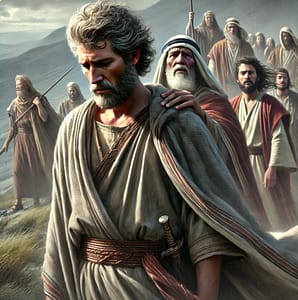 Now let’s look at Psalm 4, which feels like a continuation of Psalm 3. But this time, it’s not about David’s physical danger. It’s about his reputation. The three themes here are trusting God in trials, righteous living, and peace from God. Can you find them?
Hear me when I call, O God of my righteousness! You have relieved me in my distress; Have mercy on me, and hear my prayer.
How long, O you sons of men, Will you turn my glory to shame? How long will you love worthlessness And seek falsehood? Selah
But know that the Lord has set apart for Himself him who is godly; The Lord will hear when I call to Him. Be angry, and do not sin. Meditate within your heart on your bed, and be still. Selah
Offer the sacrifices of righteousness, And put your trust in the Lord.
There are many who say, “Who will show us any good?” Lord, lift up the light of Your countenance upon us.
You have put gladness in my heart, More than in the season that their grain and wine increased. I will both lie down in peace, and sleep; For You alone,
O Lord, make me dwell in safety. Psalm 4:1-8
David isn’t holding back here. He needs God’s attention, and he needs it now. He’s not leaning on his own righteousness—he knows it comes from God. And he uses a pattern we see in many of his psalms: he looks back at God’s past faithfulness to strengthen his present prayers.
David poses tough questions. Then we see Selah again. It’s as if David is waiting for God’s reply. Have you ever asked God why? I usually don’t. Most of the time, I know my trouble is connected to my own choices. But even so, God is faithful.
David knew he was set apart. He knew God would hear his prayers. Do you pray with that kind of confidence? Sometimes, when our prayers seem unanswered, it’s worth taking a spiritual inventory. The Bible shows us reasons why our prayers may go unheard:
And sometimes, the answer is just: Yes, No (because God has something better in store), or Wait. Waiting is the hardest, isn’t it?
David was angry, but he didn’t sin. He reminded himself to meditate on God’s word and to be still. He trusted the Lord completely. Despite the rumors, the threats, the pain—he held fast to God. David wasn’t perfect, but he was repentant. And God called him a man after His own heart.
And at the end of it all, David had joy. Not just happiness but gladness in his heart. He slept in peace. That’s the kind of peace only God gives.
Have you trusted God with your trials? It’s not easy to let go, but when you do, it’s incredible to see how God works it all out. Let us all be like David—honest, trusting, and prayerful—even in the hard times.