
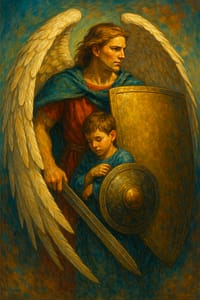
 Continuing with our “Walk Through the Psalms” series, I originally planned to highlight two Psalms this month. But as I began to reflect on Psalm 91, I realized it was too rich, too powerful, and too full of truth to share the spotlight. It deserves our full attention.
So this month, we’re diving deep—verse by verse—into this beloved Psalm of protection and trust. I’d be remiss if I didn’t include it in its entirety before we explore its depth together.
Grab your Bible and turn to Psalm 91! (I personally use a a Bible app because I can get to the book and verse quickly. But if you’re old school… that’s cool too! Follow along and make notes!
The Background of Psalm 91
Psalm 91 is a Psalm of Trust, often categorized as a wisdom Psalm. While it shares similarities with Psalm 90 (attributed to Moses), many scholars believe King David may have written it. Ultimately, the author is unknown—but the power of its message is timeless.
Though relatively short, Psalm 91 offers profound assurance. I often encourage those facing health crises to meditate on it. I read it aloud over my mother before her quadruple bypass at 84. Whether it comforted her, I can’t say—but it grounded me. And when a nurse came in and asked to pray with me, I knew it was a holy moment—a divine gift.
Dwelling in the Shadow of the Almighty
The opening verse sets the tone:
“He who dwells in the secret place of the Most High shall abide under the shadow of the Almighty.”
This invitation is not for the “super spiritual”—it’s for everyone who chooses to dwell in God’s presence. Scripture uses many images of God’s protective shadow:
Verses 1 and 2 also reveal four powerful names of God:
These names speak to His strength, intimacy, and authority. I challenge you to explore them further in: Ruth 1:16; John 20:28; 1 Kings 22:14; Genesis 32:28-30; Matthew 27:46; Exodus 15:21. What themes emerge?
The Trap of the Fowler
Verse 3 speaks of the “fowler,” a metaphor for the enemy of our souls. Like hunters of wildfowl, the enemy:
But God promises deliverance—not always in the way we expect, but always with purpose. These promises are personal, emphasized by the repeated use of the singular you throughout the Psalm.
 Personal and Spiritual Protection
Though not every believer will always be spared from physical harm, many can testify to moments of divine protection. I can think of three times in my life when I know God spared me. What about you?
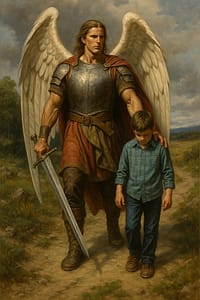
Physical safety is one layer. Spiritual protection is another. While unseen, the spiritual realm is real. God’s angels fight on our behalf. Can you picture them wielding heavenly swords against the forces of darkness? It’s awe-inspiring—and humbling.
Feathers, Shields, and Courage
Verse 4 speaks of God’s truth being our shield and buckler. The shield likely refers to a smaller, round shield used for quick defense. The buckler, a larger one, provided full-body protection. His truth guards us in both small and overwhelming battles. Have you seen these types of shiels in modern-day films depicting ancient times?
Verses 5–6 remind us not to fear—not terror by night nor destruction by day. That reassurance gives us courage during trials of uncertainty. No matter how dire the situation, God remains in control.
Angels on Assignment
Verses 11–12 assure us that angels are assigned to guard us. Though unseen, they accompany, defend, and preserve us. What a comfort to know that Heaven’s army stands ready on our behalf.
The Promise of Deliverance and Long Life
Verses 14–16 offer promises for those who love and trust God. He promises deliverance, honor, long life, and salvation. These are not always fulfilled exactly as we might hope—but they are fulfilled. He always makes a way through.
Themes to mark in your Bible
As you reread Psalm 91, highlight these core themes:
Do you agree with the themes for these verses? If not, tell me what theme you would assign to these themes?
Final Thoughts
Psalm 91 is one of the most intimate portraits of divine protection in all of Scripture. It speaks of a God who shelters, guards, and stays near. My favorite Psalm is this one. My husband’s is Psalm 23. What’s yours?
Take time this week to reread Psalm 91 slowly and prayerfully. Mark the verses that speak most deeply to you. Write them on a card. Memorize them. Then tell me—what’s your favorite Psalm and why?